Docket Page 20 – The Reckoning by John Grisham

CHARGE (What was the author trying to say?): The effects of war aren’t left on the battlefield.

FACTS: A World War II veteran calmly murders his Methodist Minister in cold blood. He never reveals the reason, and never raises a defense at his capital murder trial. His children are left to pick up the pieces after his execution while their mother remains in the state mental institution. Is murder ever justified? Once a hero, always a hero? Can war cause you to do unspeakable things? The structure of the book is quite interesting. You know about the murder from the opening pages. The details of Pete Banning’s execution are quite extensive. The book then shifts to Banning’s service in WWII, in the harsh Pacific theater. Here the description becomes quite vivid and almost too much to bear. (I confess, I skimmed much of this section.) The final section of the book ties up all the loose ends into an almost too-perfect package. Although I find this one of Grisham’s better books, the Mississippi stereotypes do become tedious. The ending is very abrupt and you are left wanting more – a sequel perhaps?

VERDICT (Was the author successful?): Guilty, as charged. Despite the difficult topic, it is quite an enjoyable read.
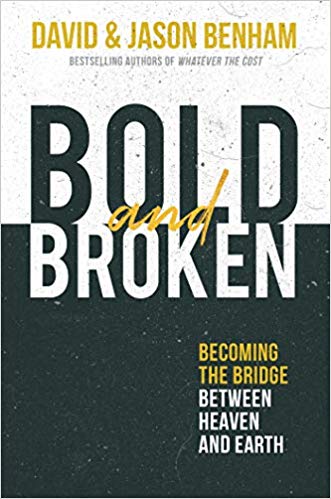
Docket Page 19 – Bold and Broken by David and Jason Benham

CHARGE (What was the author trying to say?): The authors are encouraging Christians to stand in the gap between heaven and earth.

FACTS: David and Jason Benham were fired from HGTV in 2014 for expressing their biblical values. Since that time they’ve been traveling around the country encouraging Christians to “be courageous in a compromised culture.” In this book, the brothers model how “When we talk with people, we need to constantly look for what’s broken or bruised, and seek to connect them to the God who brings healing and who can breathe life into what’s dead.” Are we available to stand in the gap between heaven and earth? A gap created by sin? Even if we are willing, do we know how? Through scripture and personal stories, the Benhams show us how we can be open to God working through us to touch others.

The brothers remind us of some fundamental truths we may have forgotten as Christians:

“You’re a minister right where you are. Your mission is to bring God glory. Your work is worship.”

While we may consider ourselves Christians, what are we doing about it? The Benhams charge us: “So let’s commit to doing the work Christ called us to, whether at the gas station, the ball field, or in the lunchroom. We may never know just how important our words might be.” Interestingly enough, it was the Benhams’ father who brought the infamous Jane Roe to Christ. As he baptized her he said, “Jane Roe washed away. Norma McCorvey emerged.” With those words the notorious abortion proponent became a true child of God.

The Benhams emphasize the power of our personal testimony. We can change lives by showing how God changed ours. As we consider “What does love require of us?” we see our call to action. Our choice is to “either stand in the way or stand in the gap.”

VERDICT (Was the author successful?): Guilty, as charged. This book should energize you in your Christian walk. It is perfect for individual use or small group study.

**I received a complimentary copy of this book from the publisher, but the opinions are solely my own. #boldandbroken

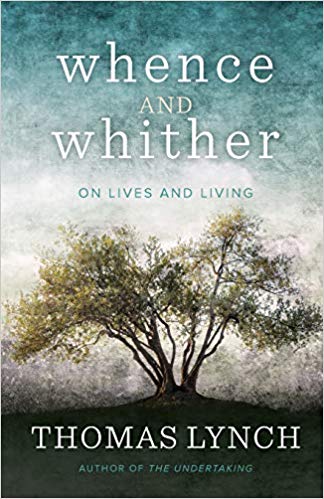
Docket Page 18 – Whence and Whither by Thomas Lynch

CHARGE (What was the author trying to say?): The author explores “How did you come to be the one you are … if every cradle asks us where, surely every coffin makes us question whither?”

FACTS: I am still not sure why I requested to read an advance copy of a book by a mortician/poet. I’m not really a fan of poetry of death. The author seems to realize this going to be hard sell “neither poets nor undertakers … are on most folks’ list of favorite things.”

Lynch seems to waiver between a stance as a religious and that of an agnostic. A resolution of his own spiritual state could galvanize his writing. He seeks to live “a hyphenated life,” juggling his writing with “the contingencies of life and death.” To my mind, mortuary science is not the muse for great poetry. At times his writing is ponderous, and other times almost unintelligible.

His descriptions of the evolution of funerals and grief and cremation were tedious, as was the Lacrimae Rerum: A Play in One Act, which appears abruptly in this section.

The book is filled with family vignettes interspersed with some poetry, some ramblings, and some jumbled prose. I never sensed a purpose or flow to the story. I normally read for pleasure and was certainly not entertained by this book.

VERDICT (Was the author successful?): Not Guilty. I could see no point to this book, much less the author’s stated purpose.

#NetGalley #WhenceandWhither

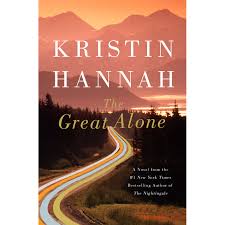
Docket Page 17 – The Great Alone by Kristin Hannah

CHARGE (What was the author trying to say?): The book was inspired by the author’s own experiences and is a juxtaposition between Alaska’s beauty and the danger the Allbright family faces.

FACTS: Having loved Hannah’s The Nightingale, I had great expectations for The Great Alone. Ernt, A Vietnam POW, moves his family to a primitive cabin in the the Alaskan wilderness to find a new life. The harshness of life in Alaska ignites the flames of an already simmering dysfunction. The Alaskan scenery is the star of the story. The plot follows a predictable course, pitting Leni, the heroine, against her family and her environment. As Leni says, “Someone said to me once that Alaska didn’t create character, it revealed it.”

VERDICT (Was the author successful?): Hung jury. The descriptions of Alaska were beautiful, but the plot was formulaic.

Docket Page 16 – The Boy by Tami Hoag

CHARGE (What is the author trying to say?): This thriller was intended to challenge you – is it an unfathomable loss or an unthinkable crime?

FACTS: This is book #2 in Hoag’s Broussard and Fourcade series. The book opens with the brutal murder of a young boy. Nick Fourcade and Annie Broussard are deputies with the Pontout Parish Sheriff’s Deparment. Fourcade is called to the murder scene. “What he was about to see would change him. The dead always did that. What lingered of their souls grabbed hold and tore away a little piece of him, never to be recovered.” The investigation takes a strange twist when facts from the past come to light and more children disappear. Are the disappearances related? Who is responsible?

VERDICT (Was the author successful?): Guilty, as charged. Unexpected twists and turns will keep you engaged until the end.

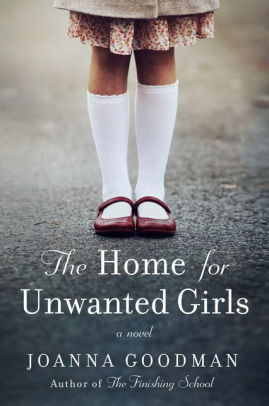
Docket Page 15 – The Home for Unwanted Girls by Joanna Goodman

CHARGE (What was the author trying to say?): Inspired by the author’s mother, the daughter of an Anglo father and French-Canadian mother, the book addresses cultural, religious, and moral divides.

FACTS: In order to increase the per diem paid to nuns housing orphans in Quebec during the mid-twentieth century, the orphans were declared insane and the orphanages were converted to hospitals for the insane. The story traces a mother-daughter bond that could not be broken.

VERDICT (Was the author successful?): Guilty, as charged. A shocking look at undisclosed things occurring during own lifetime.

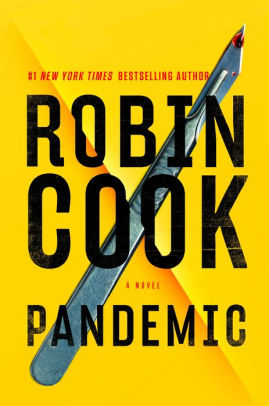
Docket Page 14 – Pandemic by Robin Cook

CHARGE (What was the author trying to say?): Gene mutation, specifically CRISPR/CAS9, can be done with relative ease with dangerous consequences.

FACTS: People begin dropping dead on the NY subway. A Chinese billionaire owns a hospital and a pharmaceutical laboratory in near-by New Jersey. Is there a connection? Autopsies reveal surprising results. Medical Examiner Jack Stapleton takes charge of the investigation as an antidote to domestic woes. Stapleton’s unorthodox investigative strategies land him on administrative leave but don’t stop him from discovering gene mutation and controversial transplantation protocols being practiced. Faced with a Faustian deal, how will he respond?

VERDICT (Was the author successful?): Guilty, as charged. An abrupt ending was not enough to keep this premise from being a headline we may see in the near future.

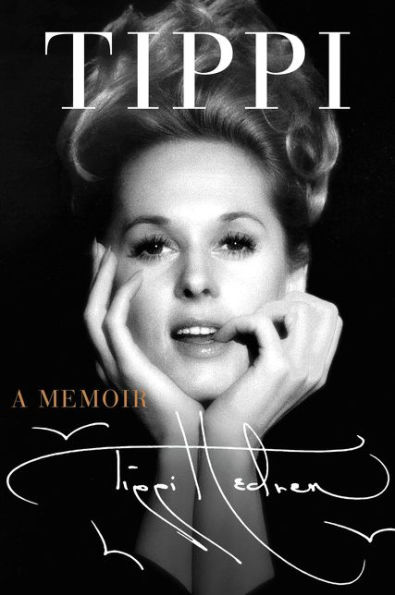
Docket Page 13 – Tippi by Tippi Hendren

CHARGE (What was the author trying to say?): “I’ve been a wife, three times, I’m a mother and a grandmother. I’ve been a model and animal rights activist and a humanitarian. I have a lot to say. So, maybe, I’ve decided, inspired by all of the above, it’s about time I stop letting everyone else tell mu story and finally tell it myself.”

FACTS: Born in small-town Minnesota, at the beginning of the Great Depression in a home without indoor plumbing, Tippi (with no acting experience), was selected by Alfred Hitchcock to star in “The Birds.” She recounts his shameful treatment of her on the set, all occasioned by her refusal to return his unwanted attentions. Of this experience she said, “I’ve made it my mission to see that while Hitchcock may have ruined my career, I never gave him the power to ruin my life.” With her acting career in shambles, Hendren went on the begin to collect lions and tigers and other African game animals in hopes of filming her own movie about wildlife preservation. Her description of each individual big cat took up much of this section of the book, which became tedious at times. Perhaps Hendren should have directed more attention to her 15 year old daughter, Melanie Griffith, who took this opportunity to move in with her 23 year old boyfriend, Don Johnson. Hendren penned this memoir at the age of 86, still living on her animal preserve.

VERDICT (Was the author successful?): Guilty, as charged. Though it drags at time, this is a fascinating look at a non-Hollywood celebrity who told her own history in her own way.

Docket Page 12 – My Antonia by Willa Cather

CHARGE (What was the author trying to say?): Cather wanted to bring the American West to life and make it personally interesting.

FACTS: I feel sure I read this in high school, but I know I didn’t appreciate it. What beautiful descriptions of the rolling red grasses covering the Nebraska plains and the wide-open skies. This is a beautiful coming-of-age novel centered around an orphaned boy from Virginia and his “Bohemian” childhood friend. The book is rich in description – both of place and of the spirit.

VERDICT (Was the author successful?): Guilty, as charged. I was sorry when this book ended!

Docket Page 11 – The Wives of Los Alamos by TaraShea Nesbit

CHARGE (What was the author trying to say?): She was trying to convey “the domestic community life in the secret Manhattan Project towns.”

FACTS: This book is written in some kind of pluralistic “royal we” voice that is very annoying. What could have been a very interesting story came across as so much drivel. Comparing this to The Atomic City Girls, it fails miserably.

VERDICT (Was the author successful?): Not guilty. This books fails to convey a sense of what were probably very interesting communities.