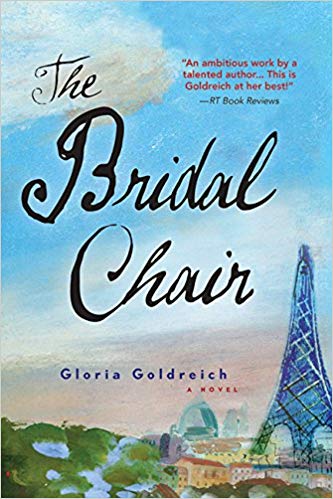
CHARGE (What was the author trying to say?): The author calls this “biofiction.” Her purpose was to explore the development of Marc Chagall and his family in the years 1934-1952.
FACTS: I knew very little about the artist Marc Chagall or how his life so vitally affected his art. As a Jew fleeing Nazi persecution, religious themes found their way into his work. His artistry created problems in his already complex family relationships. His daughter was an interesting character. As is often my complaint, I felt it ended too abruptly.
VERDICT (Was the author successful?): Guilty, as charged. This is a very interesting and informative book.
CHARGE (What is the author trying to say?): “It was originally written as part of a mental/emotional process of seeking to review and understand my life and how I might avoid a repeat of uncontrolled alcohol abuse.”
FACTS: Imagine this scene – “I was on my knees, hands cuffed behind my back, wearing shorts but no shirt, in the median of U.S. Highway 98. Blood was seeping from my left arm and shoulder where twice I had just been shot with a Taser gun. One of the arresting officers, Officer Gerry Crawford, said to me, “You used to be something. You were the hottest thing around here. Just look at you now. What happened to you? What have you done to yourself.” A respected judge, husband, father, and preacher had hit rock bottom. Writing this book was McGehee’s means to gain victory over his lifelong demons. The journey involved much introspection – considering his life experiences and his relationship with God. As he recalls the stages of his life, he emphasizes certain “waypoints” which he may not have realized at the time, but he now sees as important to his spiritual development. Memories of small town Mississippi and spiritual truths make this a book you won’t soon forget.
VERDICT (Was the author successful?): Guilty, as charged. If you are struggling, or if you know someone who is, this book can be an asset to the journey.
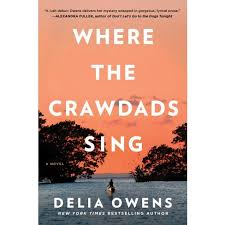
CHARGE (What was the author trying to say?): She intended to write a “sociobiological thriller.”
FACTS: Nature vs. civilization. Purity vs. evil. A well-crafted story that I could not put down. The “Marsh Girl” survives alone in the wild. “How much would you trade to defeat loneliness?” Find the price that Kya is willing to pay.
VERDICT (Was the author successful?): Guilty, as charged. A page-turning eco-thriller!
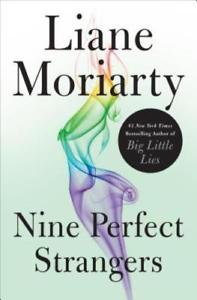
CHARGE (What was the author trying to say?): “Nine perfect strangers…are hoping for weight loss and stress relief, mindfulness and meditation but it ends up a rather different experience than what they imagined.”
FACTS: The book is so odd. Rather reminiscent of “And Then There Were None” by Agatha Christie. In its oddness, it is rather compelling. Nine strangers, a health retreat, peer pressure, and psychotropic drugs. All elements making up an interesting read.
VERDICT (Was the author successful?): Guilty, as charged. The author showed us the interesting phenomenon of how strangers will act under extenuating circumstances.
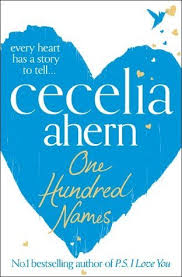
CHARGE (What was the author trying to say?): “My novels focus on the human spirit, people who have endured and who find strength in the darkest of moments, who become a version of themselves that they never believed they could be.”
FACTS: Fascinating! A journalists undertakes the last story planned by her late editor/mentor/friend. Armed with a list of 100 names, Kitty scrambles to find the story that links them together, as she fights to recover from a staggering libel judgment.
VERDICT (Was the author successful?): Guilty, as charged. Wonderful story of redemption and the inherent goodness of people.
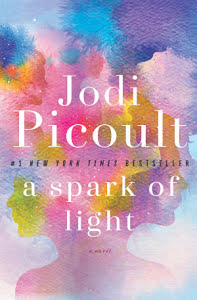
CHARGE (What was the author trying to say?): To inspire you to start difficult conversations and create more understanding about the choices we make.
FACTS: With abortion so much in the news, it was interesting to read a novel about abortion in Mississippi. The reverse chronology was annoying, as were the author’s convictions, which she shared freely.
VERDICT (Was the author successful?): Not guilty. It seems like the only conversation the author would entertain was one that agreed with her position.
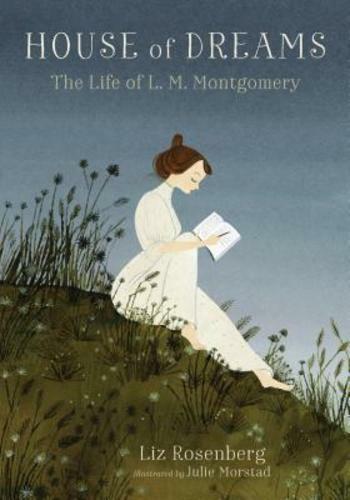
CHARGE (What was the author trying to say?): To write “a biography that includes recent revelations about the author’s last days and to encompass the complexity of a brilliant and checkered life.”
FACTS: What a beautiful book! I grew up on Anne of Green Gables and have visited Prince Edward Island. Conventional wisdom would tell you that these extraordinarily charming stories must have been written by a happy, well-adjusted optimist. It is fascinating to learn what lurked behind Montgomery’s luminous writing. The book is beautifully written. The author draws you into Maud’s persona, sharing portions of her private journals. Her descriptions of some of Montgomery’s lesser-known works will have you adding to your reading list.
VERDICT (Was the author successful?): Guilty, as charged. I highly recommend this for anyone who has ever read any of L. M. Montgomery’s books.
CHARGE (What was the author trying to say?): Written as the author’s “love letter to her daughter, one that illuminates the universal need for connection and the heroine’s journey to find her tribe.”
FACTS: I am not a fan. Rather than being a real story about open adoption, this was more the progressive feminist diatribe of a narcissist. All relationships revolved around the author and her point of view, and often seemed harmful to her daughter. I found it disturbing and left me concerned for her adopted daughter.
VERDICT (Did the author achieve what they intended?): Not guilty. Far from being a “love letter” to her daughter, this exposed a self-centered mother looking to satisfy only her own needs.
CHARGE (What was the author trying to say?): To write books that show “Even though the Amish live a different lifestyle, as Christians our core beliefs are the same…We love Jesus and really, what better thing to have in common than our love for Him.”
FACTS: Many Amish romances are written in stilted language with predictable plots. The Farmer’s Bride is quite different. The language flows and the plot unfolds naturally. The notion of a single Amish woman not looking for a suitor is a theme rarely explored. The characters are all developed and not stereotypical. The strengths and talents of the heroine are celebrated, rather than stifled, as usually occurs in books of this genre. Very readable and enjoyable. This is Book #2 of the Brides of Birch Creek. Full disclosure: I received a complimentary copy of this book from Zondervan through NetGalley. Opinions expressed in this review are completely my own.
VERDICT (Was the author successful?): Guilty, as charged. The author gives a glimpse into Amish culture which shows that underneath their surface differences, they are very much like us.
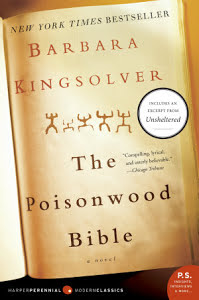
CHARGE (What was the author trying to say?): Kingsolver wrote the Poisonwood Bible as “a study of this persistent human flaw – arrogance masquerading as helpfulness.”
FACTS: This book is filled with beautiful prose telling a less-than-beautiful story. A flawed missionary carries a flawed gospel to the Congo. Souls fail to be won and lives are lost. Out of a destroyed nuclear family bloom next-generation family groups intertwined with the future of the Congo. The survivors all manage to find ways to fill up the hole ripped open by their African adventure. “You can’t just sashay into the jungle aiming to change it all over to the Christian style without expecting the jungle to change you right back.”
VERDICT (Was the author successful?): Guilty, as charged. While it is easy to get lost in the beautiful wordiness of this book, it’s agenda is to condemn colonialism and proselytism. Many times the message gets lost in the deluge of words. Not an easy read, but worth the effort for the beauty of the language.



 Book Court