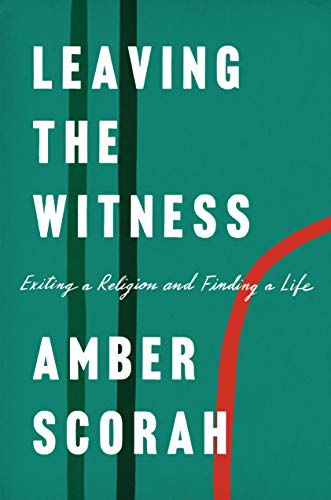
Docket Page 40 – Leaving the Witness by Amber Scorah

CHARGE (What is the author trying to say?): To describe leaving the Jehovah Witness lifestyle.

FACTS: Amber and her husband traveled to China as Jehovah Witness missionaries. Their marriage was over but their religion bound them together. “I was not allowed to leave him, so perhaps if I left enough places with him, it would suffice.” She had given up a career, education, financial security, and close personal relationships to save souls from destruction. They arrived in China in 2–5 where her religion had been banned since the 1950’s. Because of this, they were freed from the strict requirements of multiple weekly meetings, continual study, avoidance of worldly people, etc. In Communist China they actually found freedom. The book spends a lot of time talking about the founding of the Jehovah Witness religion and how the author’s family became involved. Though I expected an abrupt climatic break, the author’s “enlightenment” was much more subtle. How does she replace her religion. Her choices are rather disturbing.

VERDICT (Was the author successful?): Hung jury. I started out being sympathetic to her plight, but was very disappointed with her in the end.

#LeavingTheWitness #NetGalley
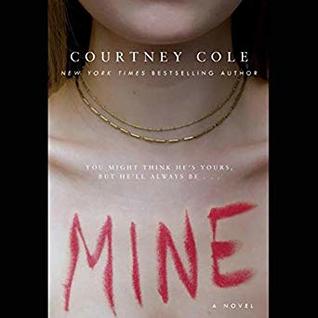
Docket Page 39 – Mine by Courtney Cole

CHARGE (What was the author trying to say?): To explore the efforts of an affair on a marriage.

FACTS: Tessa had it all – a successful handsome and loving husband, three great kids, and a multi-million dollar beauty industry she created. Did she take her life for granted? Lindsey is a young beautiful single mother working as a secretary to support herself through nursing school. Her son is being raised by her mother in another state as Lindsey tries to make a better life. Tess and Lindsey’s lives collide in a beautiful beachfront house as a powerful hurricane bears down. The effects of this meeting will change them both forever.

VERDICT (Was the author successful?): Guilty, as charged. A fast read that leaves you wanting more.

#Mine #NetGalley

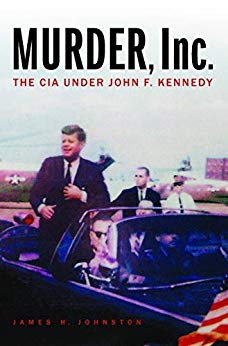
Docket Page 38 – Murder, Inc. by James H. Johnston

CHARGE: To explore whether the assassination of John F. Kennedy was ordered by Fidel Castro as the result of the CIA’s attempts to assassinate Castro?

As JFK assumed the presidency in 1961, he inherited a CIA that President Eisenhower described as “a legacy of ashes.” It had deviated from the mission for which it was created – intelligence gathering – into covert action. One of the first pressures placed on the new president was to do something about Castro and Cuba. Working with the Mob, the CAI plotted the assassination of Fidel Castro, while simultaneously planning the doomed Bay of Pigs Invasion. It was fascinating to learn that the CIA had an assassination team in Cuba during the Cuban Missile Crisis,despite their informal commitment not to attempt to overthrow the Castro government. After resolution of the crisis, the US continued to work toward a solution of the Cuba problem. Castro understood that these activities were continuing. In an interview with the AP in September 1963, Castro said, “United State leaders should be mindful that if they are aiding terrorist plans to eliminate Cuban leaders, they themselves will not be safe.” Were these words prescient? Was this the rationale for Oswald’s continued efforts to enter Cuba. Did he receive his instructions while in Mexico City? What were his ties with Russia – where he lived and married a Russian woman. Four days before the assassination, in a speech in Miami, President Kennedy called Castro “a barrier to be removed.” Had he just called for his own assassination? After Kennedy’s death, the investigation was hampered by the inability of the FBI and CIA to cooperate. In effect, Oswald had brought about regime change. Evidence seems to indicate that all investigations of the Kennedy assassination were to steer clear of the issue of foreign involvement. Some have called the Kennedy assassination one of the greatest intelligence failures in history. This is an extensive investigation of all these circumstances.

VERDICT: Guilty, as charged. An exhaustive treatment of an interesting theory.

#MurderInc #NetGalley

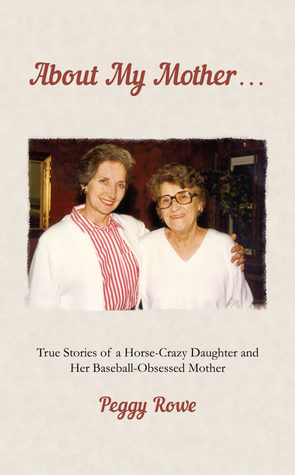
Docket Page 37 – About My Mother: True Stories of a Horse-Crazy Daughter and Her Baseball-Obsessed Mother by Peggy Rowe

CHARGE (What is the author trying to say?): To comfort every daughter “who ever thought her mother was from another planet.”

FACTS: Mike Rowe, the television host and narrator, published his mother’s memories of her mother, Thelma Knobel. They were “two completely divergent personalities who interacted every single day for the better part of seventy years.” The book provides cute G-rated vignettes of life in a simpler time. For those of us of a similar age, the stories evoke similar memories of growing up in a kinder, simpler world. The book is full of love and humor. “…Cousin Jimmy laid his hand to the side of his nose, tilted his head, and honked like a barnyard goose during mating season.” We all have memories like this. It was a pleasure to recall them again. This book is very comfortable. Reading it is like an old pair of shoes, a cozy sweater, or a hug from your Mom. These are sweet memories that are pleasingly satisfying.

VERDICT (Was the author successful?): Guilty, as charged. This is a feel-good read.

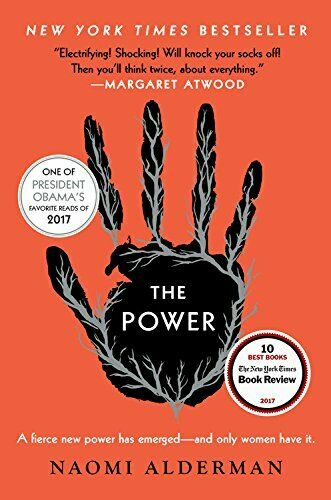
Docket Page 36 – The Power by Naomi Alderman

CHARGE (What is the author trying to say?): To explore the origins of power.

FACTS: Women and girls discover they possess electric power within their bodies. As incidents of injury and murder come to light, society becomes segregated along gender lines. “The power to hurt is a kind of wealth.” Out of this phenomenon springs a new religion – does the power originate from God or Satan? As women consolidate their power, a group called “Male Power” grows up in opposition. Is this all leading up to a gender war? How many men are actually necessary? “Power doesn’t care who uses it.” Is this history or prophecy? The book seems excessively violent. While the book doesn’t inspire a great love or a great hate, it does make you think.

VERDICT (Was the author successful?): Guilty, as charged. A rather dystopian look at power.

Docket Page 35 – Pretty Guilty Women by Gina LaManna

CHARGE (What is the author trying to say?): To solve a murder after four women confess to the killing.

FACTS: A society wedding party books an exclusive spa and resort for a week of festivities. The action switches back and forth from the perspective of four wedding guests who ultimately confess to the same murder. Old college rivalries, family dysfunction, abuse, and financial crimes all contribute to the mystery. Expected solutions are derailed as the facts fall into place. It’s not great literature, but it is a pleasant read.

VERDICT (Was the author successful?): Guilty, as charged. Imaginative twists and turns.

#PrettyGuiltyWomen #NetGalley

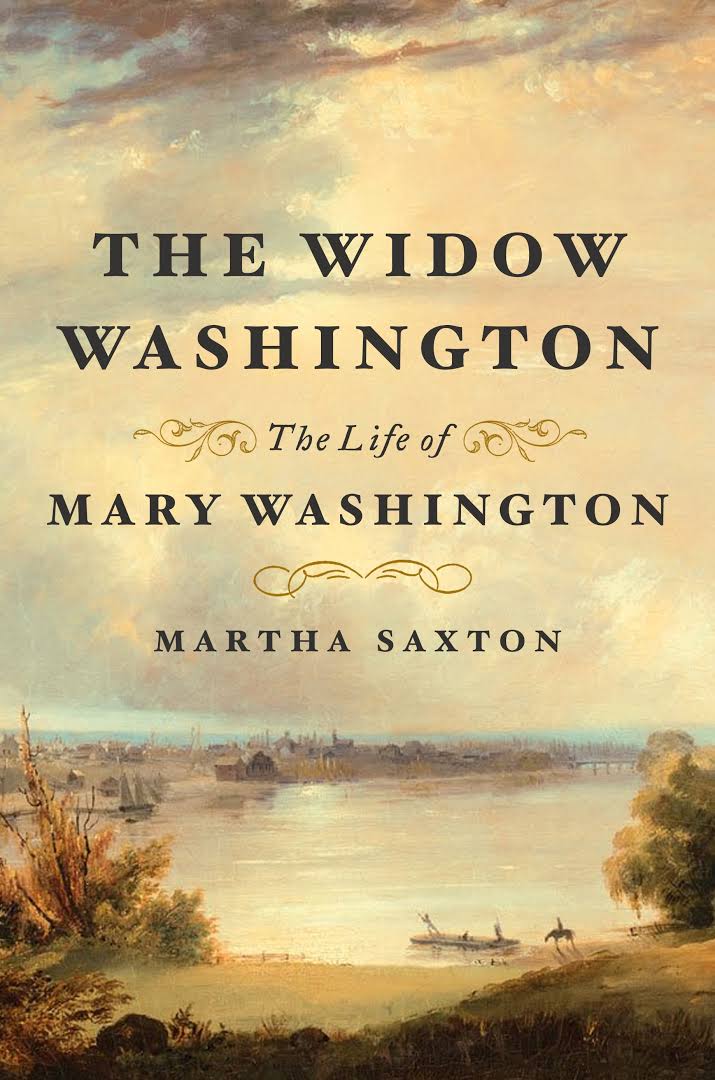
Docket Page 34 – The Widow Washington by Martha Saxton

CHARGE (What is the author trying to say?): To explore why Mary Ball Washington, the mother of George Washington, has never been recognized for her influence on t’he life of George Washington.

FACTS: With the author’s acknowledgment of the lack of primary sources about the life of Mary, Ball, she then goes on to spend much effort outlining how her life might have unfolded. This proved rather tedious. The prologue states: “I am not normally drawn to write about women whose fame derives from men or about slaveholding women.”Rather than simply stating history, she tries to rail against it. One example: “Mary’s status in those formative and porous years as a slave owner at or before her third birthday, and her daily intimacy with her independent mother, contributed to her air of command.” I find that ludicrous. I doubt she realized she owned slaves at the age of three! Orphaned at age 12, Mary was raised by an older sister and married the widower Augustine Washington at the age of 22. Mary’s first child, George, was born on February 22, 1732. Much of what follow are generalizations of child-rearing practices of the time, not specific experiences of the Washingtons. When George was 11 his father died. The Washingtons’ life from that point was described as “austere.” The author offers no indication that Mary had any unusual influence over George. With her lack of education and provincial nature, it seems quite impossible that Mary had the effects on George that the author theorizes. The number of footnotes made the work very unreadable.

VERDICT (Was the author successful?): Not guilty. This book was a disappointment.

#TheWidowWashington #NetGalley

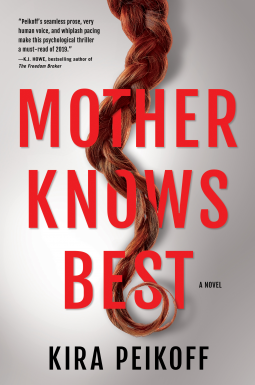
Docket Page 33 – Mother Knows Best by Kira Peikoff

CHARGE (What is the author trying to say?): To explore the limits of genetic manipulation.

FACTS: Combine genetic manipulation and IVF. What could go wrong? Abby has two mothers – she was conceived from an egg composed of the nucleus of one mother’s egg and the mitochondria of another. She was conceived in secret until one man cracks and reports it to the authorities. Is Abby really a Frankenbaby? Does she know the story of her origin? This is a fascinating story of biology and relationships. How far can ethics be pushed? Do the means justify the end? This story is thoroughly believable and probably a situation that is not too far in the future.

VERDICT (Was the author successful?): Guilty, as charged. This is a book I could not put down.

#MotherKnowsBest #NetGalley

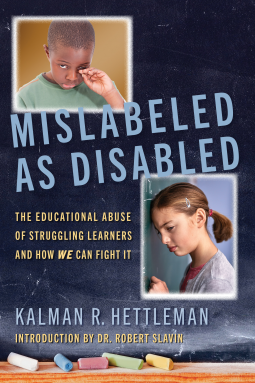
Docket Page 32 – Mislabeled as Disabled: The Educational Abuse of Struggling Learners and How We Can Fight It By Kalman R. Hettleman

CHARGE (What is the author trying to say?): To show how struggling learners are trapped in a flawed educational system and what can be done to remedy the broken system.

FACTS: The author believes the majority of students in special education are not disabled. The truly disabled are very different from struggling learners, though they all get grouped together. The truly disabled make up on 15-20% of all students in special education. They are mislabeled for expediency. Response to Intervention (RTI) is offered as a solution, however it seems economically unfeasible. The author also seems to discount the effects of family dysfunction on educational success or failure. This book contains very detailed descriptions of educational problems and potential solutions. It is not designed for the causal reader – going into much more detail than appears necessary, but falls short of workable solutions. This book is obviously intended for a very particular class of reader – not the general public.

VERDICT (Was the author successful?): Not guilty. I found the solutions to be less effective than the enumeration of the problems.

#MislabledasDisabled #NetGalley

Docket Page 31 – Dutch Girl: Audrey Hepburn and World War II by Robert Matzen

CHARGE (What is the author trying to say?): To explore Audrey Hepburn’s early years in the Netherlands during World War II and how it affected her development as a person and as an actress.

FACTS: Audrey, called Adriaantje, was born in Brussels. She was blindsided at age 6 by the separation of her parents and her banishment to a small boarding school in England. “She would never quite recover from the shock of the separation.” Her mother, Ella, was a Nazi-sympathizer and spent a lot of time in Germany. Her father also traveled extensively for the Third Reich. After Great Britain declared war on Germany, Audrey was moved to the Netherlands, where she lived with her mother and two half-brothers. Reunited with her mother would prove difficult. “Audrey would spend most of the next forty-five year subjugating her own will to that of her mother.” Audrey was trained in classical ballet. The circumstances of Anne Frank and the writing of her diary had a profound effect on Audrey. As the author describes the horrors and privations of the war years, he notes that Hepburn very rarely discussed them herself – though these experiences affected her for the remainder of her life. The book does bog down with too much focus on the unfolding history and too little on Audrey herself.

VERDICT (Was the author successful?): Guilty, as charged.

#DutchGirl #NetGalley